You finish a shift and later notice $45 missing from your paycheck.
Payroll says the cash register was short.
Another employee is charged for a damaged company tool. Someone else sees a uniform fee deducted from the first paycheck.
Can an employer simply take those amounts from employee wages?
Not always.
Federal wage rules place limits on deductions for items that mainly benefit the employer, and state laws can provide even stronger protection. Whether a deduction is allowed depends on what the charge is for, the employee’s pay rate, overtime, and the law where the employee works.
Can an Employer Deduct a Cash Register Shortage?
Cash shortages are one of the most common disputes.
Suppose a cashier earns $9 an hour and the register is $50 short at the end of the shift.
An employer cannot simply ignore federal wage protections because it believes the employee caused the shortage.
Under federal rules, deductions for cash shortages generally cannot reduce a covered employee’s wages below the applicable federal minimum wage or cut into overtime compensation.
This matters even when the employee signed a workplace policy saying shortages may be deducted.
State law may restrict the deduction further.
If a shortage appears unexpectedly, compare the deduction with the ePaystubs guide to pay stub deduction codes to see how payroll deductions differ from ordinary taxes and benefits.
What If You Break Company Equipment?
Accidents happen.
An employee drops a scanner. A mechanic damages a company tool. A driver scratches a work vehicle.
The fact that property was damaged does not automatically mean the employer can take the full replacement cost from the next paycheck.
Federal wage rules generally prevent deductions for damaged property from cutting required wages below minimum wage or overtime protections when the expense is primarily for the employer’s benefit.
State rules can be stricter.
Some states significantly limit deductions for damaged company property, particularly when the damage was accidental rather than deliberate.
That means an employer should not assume:
Equipment broke = deduct the cost from payroll.
The circumstances and state law matter.
Can Employers Charge Workers for Uniforms?
Uniform deductions are another common issue.
If an employer requires a particular uniform for the job, federal law can treat the uniform as primarily benefiting the employer.
The employer may sometimes charge an employee for a uniform, but the cost generally cannot reduce a covered employee’s wages below required minimum wage or reduce required overtime compensation.
For example, imagine an employee earns $8 an hour and works 40 hours.
If the employer deducts $80 for a required uniform and the deduction pushes the employee’s effective wages below the applicable minimum wage, the deduction may create a federal wage problem.
A uniform cost should therefore be reviewed as part of payroll, not treated like any ordinary voluntary deduction.
What About Uniform Cleaning?
Cleaning costs can matter too.
If a required uniform needs special cleaning that an employee would not normally perform for ordinary clothing, those costs can sometimes be treated similarly to other expenses connected with the employer’s requirements.
On the other hand, ordinary clothing that can be washed normally at home may raise a different issue.
Do not assume every clothing expense receives the same treatment.
Can a Restaurant Charge a Server for a Walkout?
A customer eats a meal and leaves without paying.
The restaurant loses $75.
Can management make the server pay?
Federal rules become particularly important for tipped workers.
When an employer takes a tip credit, deductions for walkouts, breakage, or cash shortages cannot be used in a way that violates required minimum-wage protections.
So a restaurant cannot simply shift every customer loss onto a server’s paycheck without considering wage rules.
The same concern applies when employers require tipped employees to cover broken glasses or register shortages.
What If You Lose a Company Laptop or Phone?
Lost equipment can become more complicated than ordinary breakage.
An employer may have a written agreement requiring employees to return laptops, phones, tools, keys, or other company property.
But even when an employee signed an agreement, state wage-deduction rules can affect whether the employer may recover the amount directly through payroll.
A signed document does not automatically override wage law.
The employer may have another legal method to recover property or money without taking it directly from earned wages.
Can a Deduction Affect Overtime?
Yes.
This is one reason payroll teams need to review deductions carefully.
Suppose a nonexempt employee works 45 hours.
The employee is entitled to overtime under the applicable federal rules. An employer generally cannot use deductions for uniforms, damaged property, or shortages to reduce the amount of overtime compensation the employee is legally owed.
Employees should review regular hours, overtime hours, and deductions together.
If the hours themselves look wrong, the ePaystubs guide to pay stub hours that do not match a timecard can help separate a wage-deduction problem from a missing-hours problem.
Does Signing an Authorization Make Every Deduction Legal?
No.
Employee authorization can matter, particularly under state law, but a signature does not automatically make every deduction lawful.
For example, a state may require written authorization for certain deductions while still prohibiting other deductions entirely.
Employers should therefore check both federal wage protections and the specific rules of the state where the employee works.
Employees should also read deduction agreements before signing them instead of assuming they are standard payroll paperwork.
State Laws Can Be More Protective
Federal law sets a baseline.
States may impose additional restrictions on deductions for uniforms, tools, damaged property, shortages, or other employer expenses.
Some states require written authorization. Others restrict deductions for company property or impose special rules for final paychecks.
That is why a deduction that may be permitted under one state’s rules could be restricted somewhere else.
The employee’s work location matters.
How Should the Deduction Appear on a Pay Stub?
Employers may use labels such as:
- UNIFORM
- EQUIPMENT
- SHORTAGE
- TOOLS
- DAMAGE
or another payroll-specific abbreviation.
If the deduction looks unfamiliar, do not judge only by the final bank deposit.
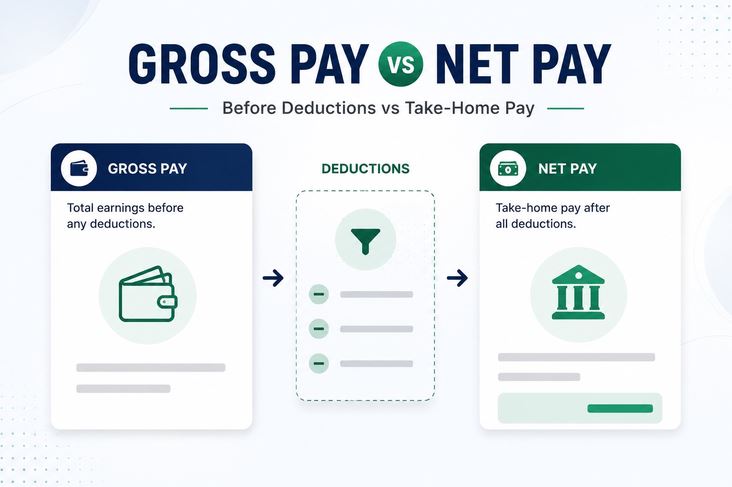
Check gross earnings first, then taxes, voluntary deductions, employer-related deductions, and net pay.
The ePaystubs guide to gross pay versus net pay can help explain where money was removed.
I hope you find the blog useful. Thanks for reading this blog.


