
Shop pink bongs online in Australia at Bongsmart. Explore stylish, functional bong options designed for smokers looking for quality, variety, and convenient online shopping.
Shop pink bongs online in Australia at Bongsmart. Explore stylish, functional bong options designed for smokers looking for quality, variety, and convenient online shopping.

Create pay stubs online with ePaystubs using accurate 2026 federal, state and FICA tax calculations. Preview free and download professional pay stubs instantly.
You finish a shift and later notice $45 missing from your paycheck.
Payroll says the cash register was short.
Another employee is charged for a damaged company tool. Someone else sees a uniform fee deducted from the first paycheck.
Can an employer simply take those amounts from employee wages?
Not always.
Federal wage rules place limits on deductions for items that mainly benefit the employer, and state laws can provide even stronger protection. Whether a deduction is allowed depends on what the charge is for, the employee’s pay rate, overtime, and the law where the employee works.
Cash shortages are one of the most common disputes.
Suppose a cashier earns $9 an hour and the register is $50 short at the end of the shift.
An employer cannot simply ignore federal wage protections because it believes the employee caused the shortage.
Under federal rules, deductions for cash shortages generally cannot reduce a covered employee’s wages below the applicable federal minimum wage or cut into overtime compensation.
This matters even when the employee signed a workplace policy saying shortages may be deducted.
State law may restrict the deduction further.
If a shortage appears unexpectedly, compare the deduction with the ePaystubs guide to pay stub deduction codes to see how payroll deductions differ from ordinary taxes and benefits.
Accidents happen.
An employee drops a scanner. A mechanic damages a company tool. A driver scratches a work vehicle.
The fact that property was damaged does not automatically mean the employer can take the full replacement cost from the next paycheck.
Federal wage rules generally prevent deductions for damaged property from cutting required wages below minimum wage or overtime protections when the expense is primarily for the employer’s benefit.
State rules can be stricter.
Some states significantly limit deductions for damaged company property, particularly when the damage was accidental rather than deliberate.
That means an employer should not assume:
Equipment broke = deduct the cost from payroll.
The circumstances and state law matter.
Uniform deductions are another common issue.
If an employer requires a particular uniform for the job, federal law can treat the uniform as primarily benefiting the employer.
The employer may sometimes charge an employee for a uniform, but the cost generally cannot reduce a covered employee’s wages below required minimum wage or reduce required overtime compensation.
For example, imagine an employee earns $8 an hour and works 40 hours.
If the employer deducts $80 for a required uniform and the deduction pushes the employee’s effective wages below the applicable minimum wage, the deduction may create a federal wage problem.
A uniform cost should therefore be reviewed as part of payroll, not treated like any ordinary voluntary deduction.
Cleaning costs can matter too.
If a required uniform needs special cleaning that an employee would not normally perform for ordinary clothing, those costs can sometimes be treated similarly to other expenses connected with the employer’s requirements.
On the other hand, ordinary clothing that can be washed normally at home may raise a different issue.
Do not assume every clothing expense receives the same treatment.
A customer eats a meal and leaves without paying.
The restaurant loses $75.
Can management make the server pay?
Federal rules become particularly important for tipped workers.
When an employer takes a tip credit, deductions for walkouts, breakage, or cash shortages cannot be used in a way that violates required minimum-wage protections.
So a restaurant cannot simply shift every customer loss onto a server’s paycheck without considering wage rules.
The same concern applies when employers require tipped employees to cover broken glasses or register shortages.
Lost equipment can become more complicated than ordinary breakage.
An employer may have a written agreement requiring employees to return laptops, phones, tools, keys, or other company property.
But even when an employee signed an agreement, state wage-deduction rules can affect whether the employer may recover the amount directly through payroll.
A signed document does not automatically override wage law.
The employer may have another legal method to recover property or money without taking it directly from earned wages.
Yes.
This is one reason payroll teams need to review deductions carefully.
Suppose a nonexempt employee works 45 hours.
The employee is entitled to overtime under the applicable federal rules. An employer generally cannot use deductions for uniforms, damaged property, or shortages to reduce the amount of overtime compensation the employee is legally owed.
Employees should review regular hours, overtime hours, and deductions together.
If the hours themselves look wrong, the ePaystubs guide to pay stub hours that do not match a timecard can help separate a wage-deduction problem from a missing-hours problem.
No.
Employee authorization can matter, particularly under state law, but a signature does not automatically make every deduction lawful.
For example, a state may require written authorization for certain deductions while still prohibiting other deductions entirely.
Employers should therefore check both federal wage protections and the specific rules of the state where the employee works.
Employees should also read deduction agreements before signing them instead of assuming they are standard payroll paperwork.
Federal law sets a baseline.
States may impose additional restrictions on deductions for uniforms, tools, damaged property, shortages, or other employer expenses.
Some states require written authorization. Others restrict deductions for company property or impose special rules for final paychecks.
That is why a deduction that may be permitted under one state’s rules could be restricted somewhere else.
The employee’s work location matters.
Employers may use labels such as:
or another payroll-specific abbreviation.
If the deduction looks unfamiliar, do not judge only by the final bank deposit.
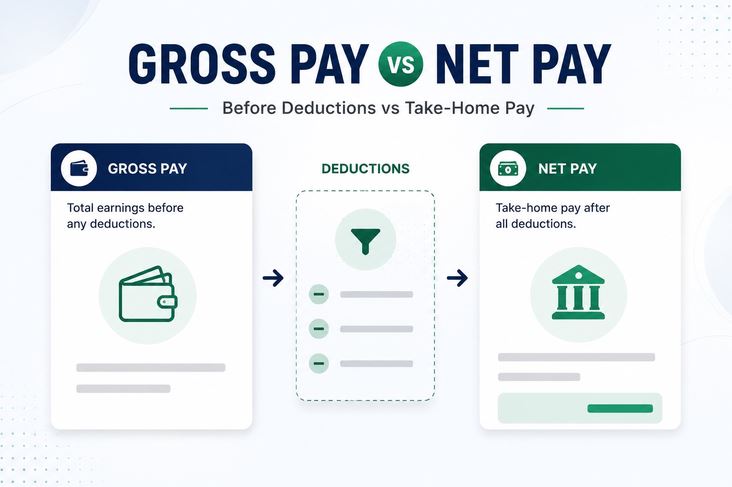
Check gross earnings first, then taxes, voluntary deductions, employer-related deductions, and net pay.
The ePaystubs guide to gross pay versus net pay can help explain where money was removed.
I hope you find the blog useful. Thanks for reading this blog.

Work with experienced Sydney kitchen designers at Premier Kitchens to create a kitchen tailored to your home, lifestyle and style. From smart layouts and practical storage to cabinetry, benchtops and finishes, the team guides you through each design decision before your custom kitchen is manufactured in Premier Kitchens’ own Sydney factory.

Feels of Green serves with high THC edibles Newton, gummies, and other cannabis products. Visit our nearby Newton, NJ dispensary for options.

Buy CBD im CBD Shop von Genuine Swiss. Hier findest du eine ruhige Auswahl mit klarer Herkunft und transparenter Qualität für ein sicheres Gefühl beim Kauf.

Step inside Premier Kitchens’ Sydney kitchen showrooms in Willoughby and Drummoyne. See full-size custom kitchens, compare finishes and layouts, and get expert design advice 7 days a week.

Buying bongs online is easier with Bongs Mart AU’s extensive range of glass designs. Explore beaker, percolator, recycler, bubble and straight-tube options in different sizes, backed by discreet Australia-wide delivery and free shipping on qualifying orders.
An employer pays $12,000 toward an employee’s adoption expenses. Later, another $7,000 is reimbursed after additional legal and travel costs are approved.
The employee’s Form W-2 eventually shows Code T: $19,000.
That may look wrong because the 2026 federal adoption-assistance exclusion is $17,670. But Code T is not simply a box showing the tax-free portion.
Employers generally report qualifying adoption-assistance payments made or reimbursed under the program in Box 12 using Code T, even when the total is above the federal exclusion.
Understanding that difference can prevent a common W-2 reporting mistake.
An employer adoption-assistance program is a written benefit plan that helps employees pay qualified expenses connected with adopting an eligible child.
The program may reimburse adoption fees, court costs, legal expenses, travel costs and other qualifying expenses under federal rules.
It is not the same as giving an employee a normal bonus.
The written plan matters, and the employer must follow federal requirements, including rules designed to prevent the benefit from unfairly favoring highly compensated employees.
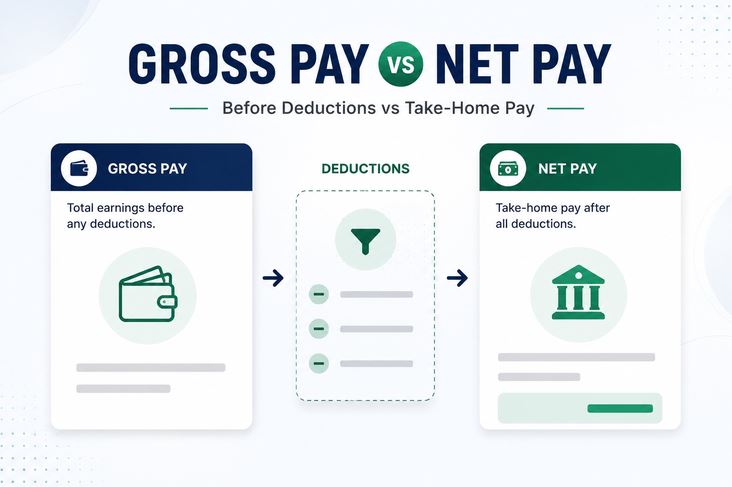
From a payroll perspective, adoption assistance should also be kept separate from ordinary earnings. The ePaystubs guide to gross pay versus net pay can help employees understand why a benefit may affect taxable wages without increasing take-home pay by the same amount.
For 2026, the maximum amount that can generally be excluded from an employee’s gross income for qualifying employer-provided adoption assistance is $17,670 per eligible child, subject to the applicable income limits and other requirements.
Suppose an employer reimburses $10,000 of qualifying adoption expenses.
If the employee otherwise qualifies, that amount may fall within the federal exclusion.
Now suppose the employer reimburses $20,000.
The full $20,000 does not automatically become tax-free simply because it came through an adoption-assistance program.
The exclusion has a limit.
Payroll therefore needs to distinguish between the total benefit provided and the amount that may ultimately qualify for exclusion.
This is the part that causes confusion.
The employer generally reports qualifying adoption-assistance payments in Form W-2 Box 12 using Code T.
That reporting amount can be higher than $17,670.
For example:
Box 12 Code T: $20,000
can be correct even though the federal exclusion is $17,670.
Code T reports the adoption benefit provided by the employer. It does not guarantee that every dollar is excluded from the employee’s federal income.
The employee generally determines the final treatment when completing the federal tax return.
Employees who want to understand other Box 12 entries can review the ePaystubs guide to W-2 boxes and Box 12 codes.
Another important point is that federal income tax and payroll taxes do not necessarily treat adoption assistance the same way.
Qualifying employer-provided adoption assistance can generally be excluded from wages subject to federal income tax withholding when the requirements are satisfied.
However, Social Security and Medicare taxes can still apply.
Imagine an employer reimburses an employee $5,000 for qualifying adoption expenses.
Federal income tax withholding may not apply to the qualifying excluded benefit.
Social Security and Medicare taxes may still be calculated on the amount.
That can make the paycheck look strange.
An employee may wonder why no additional federal income tax was withheld while Social Security and Medicare deductions increased.
The ePaystubs guide to FICA on a pay stub explains why these taxes can follow different wage rules.
This difference also explains why Form W-2 boxes do not always match.
Code T reports the adoption-assistance benefit.
Box 1 reports federal taxable wages.
Box 3 reports Social Security wages.
Box 5 reports Medicare wages.
Because qualifying adoption assistance may receive one treatment for federal income tax and another treatment for Social Security and Medicare taxes, the same benefit can affect those boxes differently.
Payroll teams should not assume that Box 1, Box 3 and Box 5 must always be identical.
The ePaystubs guide to taxable wages and W-2 box differences can help explain why these amounts sometimes differ.
A qualifying adoption-assistance program has nondiscrimination rules.
The employer cannot simply create a plan that exists mainly to reimburse owners, shareholders or highly compensated employees.
This is especially important for small and closely held businesses.
Benefits and eligibility should follow the written plan, and payroll should keep the supporting documentation with the reimbursement records.
A payment labeled “adoption reimbursement” is not automatically entitled to favorable federal treatment.
The plan itself must qualify.
More-than-2% S corporation shareholders can receive different fringe-benefit treatment.
For adoption-assistance purposes, a more-than-2% shareholder generally is not treated the same way as an ordinary employee for the exclusion.
This can easily be missed because the shareholder may receive a W-2 and appear in payroll like every other employee.
Before processing an adoption reimbursement for an owner or shareholder, payroll should verify ownership status rather than assuming the normal employee rules apply.
Employer adoption assistance and the individual adoption tax credit are connected, but they are not the same benefit.
For 2026, the federal adoption credit also uses a maximum qualified-expense amount of $17,670, subject to the applicable rules.
An employee cannot simply use the same expense twice to receive both a tax-free employer benefit and an adoption credit.
Form 8839 is generally used to determine the adoption credit and the treatment of employer-provided adoption benefits.
Payroll’s job is to report the employer benefit correctly.
The employee’s tax return determines the final personal tax result.
Employers should keep the written adoption-assistance plan, employee eligibility information, reimbursement requests and documentation supporting qualified expenses.
Do not wait until W-2 season to determine the Code T amount.
Track reimbursements as they happen.
At year-end, compare the amount the employer paid with the Code T total and verify that Social Security and Medicare wages were handled properly.
The ePaystubs guide to current and YTD amounts on a pay stub can also help employees understand how benefits and payroll taxes accumulate during the year.
Employers preparing year-end wage records can use the ePaystubs W-2 form generator after all payroll figures have been reconciled.
I hope you find the blog useful. Thanks for reading this blog.

Find a 24 hour smoke shop in Miami at Mary Jane’s Bakery Co. Explore CBD, THCA, vapes, edibles and smoking accessories with convenient anytime access.
Have a WordPress.com account? Log in now.

