Salary vs Hourly Pay: How Each One Actually Changes Your Paycheck (and the Overtime Trap Nobody Warns You About)

Meta Title: Salary vs Hourly 2026: How Each Changes Your Paycheck

Meta Description: Salary vs hourly is taxed the same, the real differences are overtime, stability, and benefits. See the “salaried non-exempt” overtime trap and how each hits your stub.

“Do you want salary or hourly?” sounds like a simple question, and most people answer based on which sounds more prestigious. But the choice quietly shapes your paycheck all year: how much you take home, whether you get paid for extra hours, how your withholding behaves, and even what your pay stub looks like. Here’s what actually differs between the two, and the single biggest myth that costs salaried workers real overtime money.

The short answer

A salaried employee gets a fixed amount each pay period no matter how many hours they work; an hourly employee gets paid for every hour, so their check rises and falls with their schedule. The taxes are identical, the IRS and FICA treat both exactly the same for the same gross income, so pay structure doesn’t change your tax rate. The real differences are overtime rights, how steady your paycheck is, and how your withholding behaves. And the most important thing to know: being salaried does not automatically mean you’re not owed overtime.

Your taxes are the same either way

Let’s clear up the most common tax confusion first. Whether you’re salaried or hourly, you pay the same FICA taxes, 6.2% for Social Security and 1.45% for Medicare, and the same federal and state income tax on the same earnings. The IRS doesn’t distinguish between “salary” and “hourly.” A $60,000 salary and $60,000 of hourly wages produce the same annual tax bill. So don’t pick one over the other expecting a tax advantage, gross income drives your taxes, not pay structure.

The real difference: overtime

Here’s where salary vs hourly actually matters for your wallet. Under the Fair Labor Standards Act (FLSA):

  • Hourly employees are almost always entitled to overtime, at least 1.5 times their regular rate for hours worked beyond 40 in a week.
  • Salaried employees may or may not get overtime, and this is where the myth lives.

The overtime rules run through your regular rate of pay, the same way a shift differential factors into overtime. For hourly workers it’s straightforward: work 45 hours at $25, and the last 5 hours pay $37.50 each, not $25.

The trap: “salaried” does not mean “no overtime”

This is the single most important thing in this article, because it costs people money every year. A lot of workers (and some employers) believe that if you’re on a salary, you’re automatically exempt from overtime. That’s false.

To be genuinely exempt from overtime, you have to meet two tests, not just one:

  1. The salary threshold. As of 2026, you generally must earn at least $684 a week ($35,568 a year) to be exempt.
  2. The duties test. Your actual job has to involve exempt-type work (executive, administrative, or professional duties).

If you’re salaried but earn below that threshold, or your job doesn’t meet the duties test, you’re a “salaried non-exempt” employee, and you’re still owed overtime for hours over 40, even though you’re on a salary. Employers who assume “salaried equals no overtime” and work these employees 50-hour weeks with no extra pay are often violating the law. If that’s your situation, it’s worth checking, because it can add up to serious unpaid wages.

How each type behaves on your paycheck

Beyond overtime, the two feel different check to check.

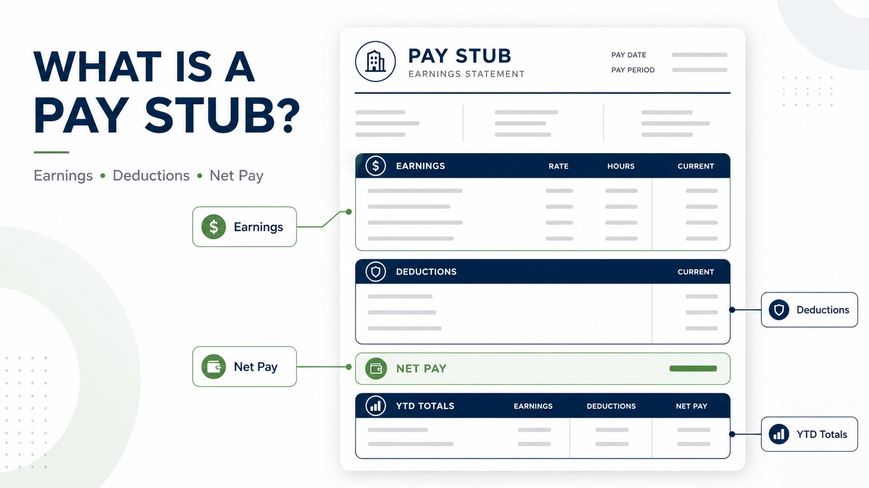
Salaried pay is steady. Your gross is the same every pay period (your annual salary divided by the number of paychecks), which makes budgeting easy. Your net can still wobble a little as benefit costs or tax elections change, but the top-line number holds. On your stub, you’ll usually see a flat salary amount rather than hours times a rate.

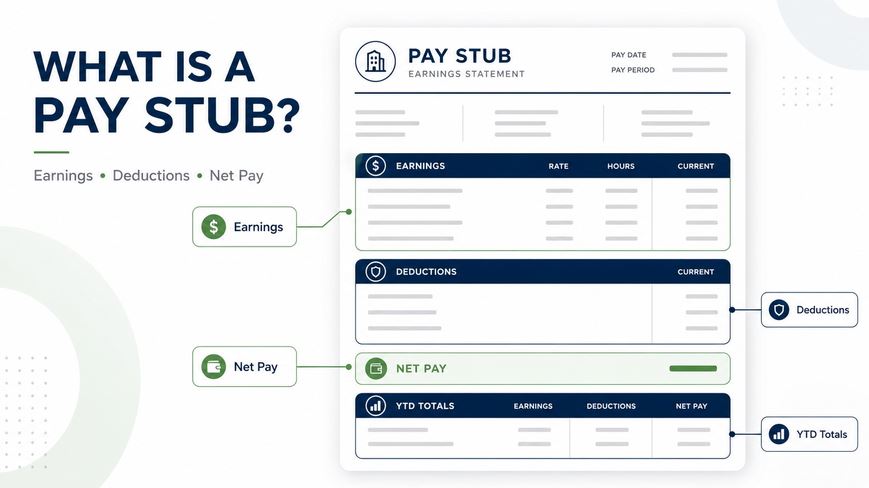
Hourly pay fluctuates. Your gross rises and falls with the hours you work, and your stub shows your rate times hours, often with separate lines for regular and overtime hours. More hours mean a bigger check; a slow week means a smaller one. That variability is the tradeoff for getting paid for every hour. Either way, the gap between what you earn and what lands is the usual story of gross pay versus net pay, and a labeled guide to reading a pay stub shows how salary or hourly earnings appear at the top.

Why your withholding jumps on a big overtime week

Here’s a quirk hourly workers notice and misread. When you work a big overtime week and your paycheck spikes, the tax withheld can look disproportionately high. That’s because payroll estimates your tax by annualizing that check, it assumes you earn that much every period, which briefly bumps you into a higher bracket for that paycheck. It’s not a penalty on overtime, and it’s not lost money. This is the same reason federal income tax withholding fluctuates from check to check, and any over-withholding comes back at tax time. Salaried workers, with steady checks, get steadier withholding and fewer surprises.

Which should you choose?

There’s no universal winner, it depends on your situation:

  • Choose hourly if you regularly work extra hours and want to be paid for every one of them, especially in roles where overtime is common. If you’ll routinely work 45+ hours, hourly with overtime often beats an equivalent salary.
  • Choose salary if you value a predictable, steady paycheck, and if the role comes with strong benefits (health insurance, PTO, retirement matching) that add real dollar value beyond the headline number.
  • Compare on total gross plus benefits, not the structure. Convert an hourly rate to annual (rate times your real hours) and add the value of benefits before deciding an offer is better.

And whatever you pick, if you’re salaried, confirm whether you’re exempt or non-exempt, because that determines whether those extra hours should be paid.

Keeping it real

Salary and hourly aren’t taxed differently, so don’t choose based on a tax myth. Choose based on what actually matters: whether you’re owed overtime, how steady you need your income to be, and the total value of the offer including benefits. The one thing every salaried worker should double-check is their exempt status, because “salaried” is not a free pass for employers to skip overtime. Know your rate, know your rights, and check your pay stub to make sure the hours and overtime you worked actually show up. A pay stub generator like ePaystubs can help you keep clean records of your earnings whichever way you’re paid.

Frequently asked questions

Do salaried and hourly employees pay different taxes? No. Both pay the same FICA (6.2% Social Security + 1.45% Medicare) and the same federal and state income tax on the same gross income. The IRS doesn’t tax salary and hourly wages differently, only your total earnings matter.

Do salaried employees get overtime? Sometimes. Salary alone doesn’t exempt you. To be exempt from overtime you must earn at least $684 a week (as of 2026) and perform exempt-type duties. Salaried employees below that threshold, or without qualifying duties, are still owed overtime for hours over 40.

Is salary or hourly better? Neither universally. Hourly usually pays more if you regularly work over 40 hours (thanks to overtime), while salary offers steadier income and often stronger benefits. Compare offers on total gross pay plus the dollar value of benefits, not on the pay structure.

Why is more tax taken out during a high-overtime week? Because payroll annualizes that larger check to estimate your tax, briefly treating you as if you earn that much every period, which raises the withholding rate for that check. It usually evens out, and over-withholding comes back as a refund at filing.

The short version

Salaried and hourly pay are taxed identically, same FICA and income tax on the same gross, so pick based on what really differs: overtime, income stability, and benefits. Hourly workers are almost always owed overtime (1.5x over 40 hours); salaried workers are only exempt if they earn at least $684/week (2026) and do exempt-type duties, so “salaried non-exempt” employees are still owed overtime, a trap that costs many workers real money. Salaried checks are steady; hourly checks fluctuate with hours and show separate overtime lines, and a big overtime week can look over-taxed because payroll annualizes it (it evens out at filing). Compare job offers on total gross plus benefits, and if you’re salaried, confirm your exempt status.

This article is general information, not legal, tax, or financial advice. Overtime rules and thresholds change and depend on your role and state, so confirm your classification with your employer, your state labor office, or a qualified professional.

No Tax on Tips 2026: Why Are Tips Still Taxed on Your Paycheck?

Meta Title: No Tax on Tips 2026 | Paycheck & W-2 Rules

Meta Description: Learn why tips can still be taxed on your paycheck in 2026, who may qualify for the $25,000 deduction, and what W-4, Code TP, and Box 14b mean.

You heard about “No Tax on Tips,” checked your next paycheck, and taxes were still coming out of your tip income.

So what happened?

The phrase can make the new rule sound much simpler than it actually is. No Tax on Tips does not mean every tip disappears from payroll taxes or that employers stop reporting tipped income.

For eligible workers, the law creates a federal income tax deduction for qualified tips. Payroll reporting, Social Security tax, Medicare tax, and other rules still matter.

Here is what tipped workers should understand in 2026.

What Does No Tax on Tips Actually Mean?

Eligible employees and self-employed workers may be able to deduct up to $25,000 of qualified tips from income for federal income tax purposes.

The deduction applies to workers in qualifying occupations that traditionally received tips.

That can include workers in occupations such as restaurant service, bartending, personal care, hospitality, transportation, and other qualifying tipped jobs.

But the deduction is not the same as saying:

“The first $25,000 of tips is never taxed through payroll.”

Tips are still reported as income. Employers still have payroll responsibilities, and the worker must meet the eligibility rules to claim the deduction.

Why Are Taxes Still Coming Out of My Tips?

This is the biggest source of confusion.

Even if you may eventually qualify for the tip deduction, your employer can still withhold taxes from your paycheck.

Tips are generally still subject to Social Security and Medicare taxes when the applicable payroll rules are met.

If you see Social Security or Medicare deductions beside your tip earnings, that does not automatically mean payroll made a mistake.

For more information about these two payroll taxes, see the ePaystubs guide to FICA on a pay stub.

Federal income tax withholding can also continue unless your withholding setup appropriately accounts for the new deduction.

Which Tips Qualify?

The rules focus on qualified tips.

Generally, these are voluntary cash tips or charged tips left by customers. Tip-sharing amounts received by employees may also qualify.

The word “voluntary” matters.

Suppose a restaurant customer chooses to leave a server a $20 tip. That may be a qualified tip if the other requirements are met.

Now imagine the restaurant automatically adds a mandatory 20% service charge to every table.

That mandatory charge is not treated the same way as a voluntary tip for this deduction.

Employees should therefore avoid assuming that every amount described casually as a gratuity qualifies.

How Much Can You Deduct?

The maximum annual qualified-tip deduction is generally $25,000.

The amount may be limited depending on the worker’s income and other eligibility rules.

The deduction begins to phase out when modified adjusted gross income exceeds $150,000, or $300,000 for married couples filing jointly.

A married taxpayer generally must file jointly to claim the deduction.

The worker also needs a valid Social Security number.

Most employees will not need to calculate all of these limitations every payday. What matters is understanding that $25,000 is a maximum deduction, not a guaranteed tax-free payment for everyone.

Can You Change Your W-4 in 2026?

Yes, and this is one of the biggest payroll changes for 2026.

The 2026 Form W-4 Deductions Worksheet includes a line for estimating qualified tips.

A worker who expects to qualify may be able to account for estimated qualified tips through an updated W-4. That can affect federal income tax withholding during the year.

In simple terms, an employee may not have to wait until filing a tax return to receive the entire federal withholding benefit.

That does not mean everyone should immediately enter $25,000.

The amount entered should reflect the worker’s expected qualified tips and eligibility.

If you are unsure what FIT or federal withholding represents on your paycheck, read what FIT or FWT means on a pay stub.

Example: A Server Earns $18,000 in Tips

Consider a restaurant server who earns regular wages plus $18,000 in qualifying voluntary tips during 2026.

Assume the worker otherwise meets the deduction requirements.

The employee could potentially qualify for a deduction based on those qualified tips, subject to the applicable limitations.

However, that does not mean the employee’s pay stubs will show zero payroll tax on the $18,000.

Social Security and Medicare treatment still applies under payroll rules.

The employee may also see federal withholding during the year depending on the Form W-4 on file and how withholding has been calculated.

This distinction is why the words “No Tax on Tips” can be misleading when someone looks only at one paycheck.

What Is Code TP on the 2026 W-2?

Workers should also expect changes when they receive their 2026 Form W-2.

A new Code TP in Box 12 is used to report the total amount of cash tips reported to the employer.

That figure matters because tipped income must be properly reported.

Do not confuse Code TP with a new payroll deduction. It is a reporting code.

If you are unfamiliar with the different sections of the form, see the ePaystubs guide to W-2 boxes and codes.

What Is Box 14b?

The 2026 W-2 also introduces Box 14b for a Treasury Tipped Occupation Code.

This helps identify the occupation in which the reported tips were earned.

The occupation is important because the deduction is tied to qualifying tipped occupations.

Workers should review this information when their W-2 arrives rather than checking only total wages.

If the tip amount or occupation information appears incorrect, contact the employer or payroll department rather than simply changing the figures when filing a return.

Check Your Pay Stub Before Assuming Something Is Wrong

Seeing taxes beside tip earnings in 2026 does not mean the No Tax on Tips deduction disappeared.

The deduction affects federal income tax treatment for eligible qualified tips. It does not simply erase tipped income from payroll.

Check your regular wages, tips reported, federal withholding, Social Security, Medicare, and year-to-date totals separately.

Employers who need legitimate payroll records can use the ePaystubs online pay stub generator to create pay stubs using accurate employee wages, tips, taxes, and deduction information.

Why Washington DC’s Creative Culture Calls for a Weed Grinder With Personality

Washington, DC has a rhythm of its own. Walk through different neighborhoods and the atmosphere changes. There is street art, live music, independent shops, galleries, restaurants, murals, and communities with their own personalities. That got us thinking about something much smaller.

A weed grinder.

It might seem like an odd connection, but people express their taste through small things all the time. The mug on their desk. The shoes they wear every day. The bag they carry. The objects sitting on their coffee table.

So why should a weed grinder Washington DC be completely forgettable?

Not Everything You Own Has to Look Like Everyone Else’s

Walk into almost any smoke shop and you will see familiar grinder designs.

Round metal grinders.

Brightly colored aluminum.

Plastic options.

Multiple chambers.

The same shapes repeated again and again.

They can do the job perfectly well. That is not the issue.

The question is whether you want every object you own to look like it could belong to anyone.

Some people do not care about that. They want something functional and nothing more.

Others notice details.

They notice materials. They notice design. They like objects that feel like someone actually thought about how they would look and feel outside of a factory.

That is where wood becomes interesting.

Wood Refuses to Be Identical

A factory can produce thousands of metal grinders that look exactly the same.

Wood does not cooperate in quite the same way.

Every piece has its own grain pattern. Colors shift naturally. Lines move in different directions. Even two pieces cut from the same type of hardwood will have their own appearance.

That means a wooden grinder starts with something built into the material itself: individuality.

Woodie embraces that idea instead of trying to hide it. Each grinder is made from carefully selected exotic hardwood, with the natural grain becoming part of what makes the finished piece unique. The company combines precision CNC craftsmanship with hand finishing while keeping the character of the wood visible.

No two pieces of wood tell exactly the same story.

And honestly, that fits a city full of different neighborhoods and personalities.

Washington DC Has More Than One Personality Too

One of the best things about DC is that it is not really one single experience.

Different neighborhoods have completely different energy.

You could spend time in several parts of the city and feel like you had visited different versions of Washington.

That variety makes the city interesting.

And maybe that is why generic accessories can feel a little boring.

When everything around you has personality, why choose something with none?

A Grinder Can Be Part of Your Personal Style

Nobody is suggesting that a grinder should be treated like a luxury watch.

It is still a practical tool.

But practical objects can look good too.

A weed grinder Washington DC has a different presence than something made from brightly colored aluminum or plastic. The material is warmer. The surface has texture. The grain gives it visual character without needing logos, paint, or unnecessary decoration.

It does not have to shout for attention.

Sometimes the quieter objects are the ones people notice.

That is especially true when the material does most of the talking.

Simple Design Has Its Own Appeal

Modern products often seem to follow one rule: add more.

More compartments.

More pieces.

More features.

More things to take apart.

But simple design can be satisfying when it focuses on what people actually need.

Woodie takes that approach with its minimalist two piece construction. The grinding teeth are carved directly into the solid hardwood, avoiding unnecessary chambers and keeping the design focused on the basic purpose of the weed grinder Washington DC.

There is something refreshing about picking something up and immediately understanding it.

No instructions.

No collection of tiny parts.

Just a tool designed to do its job.

The Feel of an Object Matters More Than People Think

Think about the objects you use every day.

Some feel cheap almost immediately.

Others become familiar.

Wood has that second quality.

It feels warm in your hand. The surface is not perfectly artificial or uniform. You can feel that it came from a natural material rather than being molded into existence.

That difference might not matter to everyone.

But for people who care about design and materials, it can change the entire experience.

A weed grinder is used regularly. It becomes part of a routine.

And routines are made up of small moments.

Sometimes choosing something you genuinely enjoy holding makes those moments a little better.

Why a Wooden Weed Grinder Fits Washington DC

Washington DC has a reputation for serious institutions, but the city also has a strong creative heartbeat. Its neighborhoods, artists, performers, murals, music venues, and cultural communities all contribute to a city where different forms of expression have room to exist.

A weed grinder Washington DC search does not have to lead only to another generic accessory.

For someone who appreciates individuality, a wooden grinder offers a different direction.

Every grain is different.

Every piece has its own appearance.

The design can stay simple while still feeling personal.

Woodie was built around that idea: natural materials, thoughtful craftsmanship, and everyday objects that carry a little more character than something designed to be disposable.

Because personal style is not always about the biggest things you own.

Sometimes it shows up in the smallest ones.

And in a city with as many personalities as Washington DC, having an accessory with one of its own does not seem strange at all.

Your grinder does not have to look like everyone else’s.

CBD Blüten 2026: Small Buds, Big Buds oder Trim – wo liegt eigentlich der Unterschied?

Bei CBD Blüten entscheidet der erste Blick erstaunlich oft mit. Große, kompakte Buds wirken hochwertig. Kleine Blüten sehen unscheinbarer aus, und sobald irgendwo das Wort „Trim“ auftaucht, entsteht schnell der Eindruck, alles Kleine gehöre in dieselbe Schublade.

Das stimmt so nicht.

Small Buds, Big Buds und Trim können aus derselben Pflanze stammen, sind aber trotzdem nicht dasselbe Produkt. Wer CBD Blüten vergleicht, sollte deshalb nicht nur auf Größe und Optik schauen.

Small Buds sind keine halben Blüten

Der Name klingt erst einmal wenig spektakulär. Small Buds oder Mini Buds sind schlicht kleinere Blütenstände.

Sie können bei der Sortierung einer Ernte von den größeren Blüten getrennt werden. Dabei bleiben sie trotzdem erkennbare, vollständige Blüten.

Genau das unterscheidet sie von Trim.

Ein kleiner Bud kann fest, aromatisch und sauber getrocknet sein. Er muss nicht schlechter sein, nur weil er optisch weniger Eindruck macht.

Das wird beim Kauf gerne vergessen.

Warum große Buds trotzdem mehr Aufmerksamkeit bekommen

Big Buds verkaufen sich leichter über das Auge.

Eine große Blüte sieht auf einem Produktfoto kräftiger aus. Struktur, Farbe und Form lassen sich besser erkennen. Für viele Käufer gehört genau diese Optik zum Qualitätsgefühl.

Daraus entsteht schnell die Gleichung:

groß = hochwertig.

In der Praxis ist sie zu einfach.

Eine große Blüte kann zu trocken gelagert worden sein. Sie kann Aroma verloren haben oder schlecht verarbeitet sein. Größe sagt eben nur etwas über die Größe aus, nicht automatisch über alles andere.

Trim ist etwas ganz anderes

Hier liegt wahrscheinlich die häufigste Verwechslung.

Trim entsteht beim Zuschneiden und Aufbereiten von Blüten. Dabei werden Blattteile und kleinere Pflanzenstücke entfernt.

Das Material sieht deshalb anders aus als ein Small Bud.

Bei einem Mini Bud erkennst du noch klar die Blütenstruktur. Trim wirkt meist lockerer, kleinteiliger und weniger einheitlich.

Wer Small Buds und Trim als dasselbe verkauft, vermischt zwei unterschiedliche Dinge.

Haben kleine CBD Blüten weniger CBD?

Nicht zwangsläufig.

Der CBD-Gehalt hängt wesentlich stärker von Sorte, Genetik, Anbau und Charge ab als von der sichtbaren Größe einer einzelnen Blüte.

Ein kleiner Bud aus derselben Charge kann ähnliche Werte haben wie ein größerer. Trotzdem wäre es falsch, daraus eine feste Regel zu machen.

Wenn du es wirklich wissen möchtest, helfen Produktdaten und Laborwerte mehr als der Blick auf den Durchmesser.

Die Größe allein kann dir den Cannabinoid-Gehalt nicht verraten.

Beim Aroma wird es ebenfalls komplizierter

Auch hier ist größer nicht automatisch besser.

Das Aroma einer CBD Blüten hängt unter anderem von Sorte, Terpenprofil, Trocknung, Lagerung und Frische ab.

Eine kleine, gut gelagerte Blüte kann sehr präsent riechen. Eine große Blüte, die lange offen oder zu trocken gelagert wurde, kann dagegen überraschend flach wirken.

Deshalb würde ich Aroma nie allein nach Größe beurteilen.

Die Nase sieht keine Zentimeter.

Warum Small Buds oft günstiger angeboten werden

Hier spielt die Optik tatsächlich eine große Rolle.

Große, schöne Blüten lassen sich einfacher als Premiumprodukt präsentieren. Sie wirken im Glas oder auf Fotos attraktiver und werden deshalb häufig höher bepreist.

Small Buds haben diesen optischen Vorteil nicht.

Das bedeutet aber nicht automatisch, dass die kleinere Variante qualitativ schlechter ist. Oft ist sie einfach weniger repräsentativ.

Wer weniger Wert auf große Einzelblüten legt, kann hier durchaus ein interessantes Preis-Leistungs-Verhältnis finden.

Wann Big Buds mehr Sinn ergeben

Es gibt trotzdem gute Gründe, größere Blüten zu bevorzugen.

Manche Käufer möchten die Struktur der Blüte sehen. Andere mögen es einfach, wenn ein Produkt optisch hochwertig wirkt.

Big Buds eignen sich deshalb besonders für Menschen, denen Präsentation und ein möglichst intakter Blütenaufbau wichtig sind.

Das ist völlig legitim.

Nur sollte man diesen Wunsch nicht mit einem objektiven Qualitätsbeweis verwechseln.

Und wann sind Small Buds interessant?

Small Buds sind vor allem dann spannend, wenn die Optik nicht an erster Stelle steht.

Wer dieselbe Sorte lieber günstiger kaufen möchte oder keinen Wert auf besonders große Einzelblüten legt, kann mit Mini Buds gut bedient sein.

Entscheidend ist, dass die Produktangaben stimmen.

Wenn Herkunft, CBD-Wert, THC-Wert und Sorte nachvollziehbar sind, ist die Größe nur noch ein Merkmal unter mehreren.

Woran man gute CBD Blüten eher erkennt

Wenn ich CBD Blüten vergleichen würde, käme die Größe ziemlich weit unten auf meiner Liste.

Zuerst würde ich schauen, ob Sorte und Herkunft klar angegeben sind.

Danach CBD und THC.

Dann Frische, Geruch und Verarbeitung.

Auch Laborinformationen können hilfreich sein, besonders wenn sie einer konkreten Charge zugeordnet werden können.

Erst danach würde ich überlegen, ob mir große oder kleine Buds besser gefallen.

Diese Reihenfolge ist weniger spektakulär, aber sinnvoller.

„Premium“ sagt erstaunlich wenig

Viele Shops arbeiten mit Begriffen wie Premium, Top Shelf oder AAA.

Das klingt gut, ist aber kein einheitlicher Standard.

Ein Produkt wird nicht automatisch besser, weil ein starkes Wort danebensteht.

Ein sauber deklarierter Small Bud mit nachvollziehbaren Daten kann informativer sein als eine große Blüte, bei der außer „Premium“ kaum etwas erklärt wird.

Transparenz ist deshalb oft der bessere Qualitätscheck.

Besonders wichtig in der Schweiz

Beim Schweizer CBD-Markt spielt auch der THC-Gehalt eine wichtige Rolle.

Deshalb sollte dieser Wert klar angegeben sein.

Ob ein Bud groß oder klein ist, ändert daran nichts.

Gerade beim Vergleich verschiedener CBD Blüten lohnt es sich, zuerst die Fakten zu prüfen und die Optik danach.

FAQ

Sind Small Buds echte CBD Blüten?

Ja. Small Buds sind kleinere Blütenstände und nicht automatisch Trim oder Restmaterial.

Sind große Blüten stärker?

Nicht unbedingt. Die Größe allein sagt wenig über CBD- oder THC-Gehalt aus.

Was ist der deutlichste Unterschied zwischen Small Buds und Trim?

Small Buds haben eine erkennbare Blütenstruktur. Trim besteht eher aus kleineren Blatt- und Pflanzenbestandteilen, die bei der Verarbeitung anfallen.

Warum kosten Big Buds oft mehr?

Vor allem wegen Optik, Größe und Präsentation. Das bedeutet nicht automatisch, dass sie in jeder Hinsicht besser sind.

Können Mini Buds genauso aromatisch sein?

Ja. Aroma hängt wesentlich stärker von Sorte, Terpenprofil, Trocknung und Lagerung ab als von der Größe.

Fazit

Bei CBD Blüten ist der erste Eindruck nicht immer der beste Ratgeber.

Big Buds sehen beeindruckender aus. Small Buds sind kompakter und häufig günstiger. Trim gehört wiederum in eine andere Kategorie.

Wer wirklich vergleichen möchte, sollte deshalb nicht bei der Größe stehen bleiben.

Sorte, Herkunft, Frische, CBD- und THC-Werte, Lagerung und Verarbeitung erzählen deutlich mehr über ein Produkt als ein großer Bud auf einem Foto.

Am Ende ist die Frage also nicht: groß oder klein?

Sondern: Was steckt tatsächlich dahinter?

3 Paycheck Months in 2026: Find Your Extra Paycheck Dates

Meta Title: 3 Paycheck Months 2026: Find Your Extra Payday

Meta Description: Find your three-paycheck months in 2026 based on your biweekly payday. See key dates, 26 vs 27 paychecks, taxes, deductions and budgeting tips.

Getting paid three times in one month can feel like a bonus, especially if your household budget is built around two paychecks. For many biweekly workers, 2026 includes two months with three paydays instead of two.

The exact months depend on your pay cycle.

If your biweekly Friday schedule included January 2, 2026, your three-paycheck months are January and July. If your schedule included January 9, your three-paycheck months are May and October.

That makes October especially important for workers whose paydays fall on October 2, October 16 and October 30.

Why Do Three-Paycheck Months Happen?

Biweekly employees are usually paid every 14 days.

That creates 26 regular paychecks during most years.

A calendar year, however, is longer than exactly 26 two-week periods. Because months are not all the same length, two pay cycles occasionally fit three paydays into a single month.

That third check is not usually extra annual income. It is simply part of the same annual pay schedule.

If you are unsure where the actual pay date appears, understanding what a pay stub is can help you distinguish the pay period from the date the money was issued.

Which Months Have Three Paychecks in 2026?

There is no single answer for every employee because biweekly schedules begin on different Fridays.

One common schedule has these three-paycheck months:

January 2026

  • January 2
  • January 16
  • January 30

July 2026

  • July 3
  • July 17
  • July 31

Another common schedule has:

May 2026

  • May 1
  • May 15
  • May 29

October 2026

  • October 2
  • October 16
  • October 30

The easiest way to identify your schedule is to start with one confirmed payday and move forward in 14-day intervals.

Do not assume your coworker has the same dates if they are paid through a different employer or payroll schedule.

Is the Third Paycheck Really Extra Money?

Not exactly.

Suppose you earn $52,000 a year and receive 26 biweekly paychecks.

Your gross pay per check would be:

$52,000 ÷ 26 = $2,000

The three-paycheck month does not increase your annual salary to $54,000. It simply means three of those regular $2,000 gross checks happen to fall inside one calendar month.

It may still feel like extra money because many monthly budgets are built around only two checks.

That is where knowing gross vs net pay becomes useful. A $2,000 gross paycheck does not mean $2,000 reaches your bank account after taxes and deductions.

Will the Third Paycheck Be Taxed?

Yes, it is still a regular paycheck.

Federal income tax withholding may apply, along with Social Security, Medicare and state or local taxes where required.

You may see the same payroll deductions that appear on your first two checks.

Employees confused by Social Security and Medicare deductions can review what FICA is on a pay stub to see why those taxes continue even during a three-paycheck month.

Federal withholding may also vary slightly depending on your wages, W-4 information, bonuses, overtime or other taxable earnings.

Why the Third Check Sometimes Looks Bigger

Some employees notice that their third check is larger than the first two.

This may happen because certain benefit deductions are taken only a fixed number of times per month.

For example, an employer might deduct health insurance from the first two checks but not the third. Other employers spread the same benefit cost across all 26 pay periods.

Retirement contributions may also continue normally if they are calculated as a percentage of pay.

That means two employees earning the same salary may have very different third-paycheck amounts.

The best approach is to compare the deduction lines on all three checks rather than assume payroll made an error.

If the layout feels confusing, the ePaystubs guide on how to read a pay stub can help you separate earnings, taxes, benefits and net pay.

What Happens to YTD Earnings?

Your year-to-date totals continue building normally.

If you receive three checks in October, each one increases your annual earnings, taxes and deduction totals.

That can make the YTD column jump faster than it did during a normal two-paycheck month.

Checking what YTD means is helpful when comparing one pay period with the total you have earned since the beginning of the year.

This can also help catch payroll problems. If the current check looks correct but the YTD amount does not, an earlier adjustment may be responsible.

Can a Holiday Change the Payday?

Yes.

When a scheduled payday falls on a bank holiday or when the employer uses an early-processing policy, the money may arrive before or after the expected date.

That matters near the beginning or end of a month.

A payday expected on January 1, for example, may move into December depending on company policy. That can change which calendar month appears to have three payments.

Use your employer’s actual payroll calendar instead of relying only on a generic biweekly schedule.

What Should You Do With a Three-Paycheck Month?

There is no rule saying the third paycheck must be saved.

Some people use it for irregular expenses that do not fit neatly into a monthly budget.

That might include car insurance, school costs, debt payments, emergency savings, home repairs or annual subscriptions.

Others simply treat it like every other check.

The important point is not to assume it is free money. Rent, groceries, taxes and other expenses still continue after the three-paycheck month ends.

If your normal monthly budget works on two checks, the third payday can create useful breathing room. Just remember that the following month will usually return to the normal two-check schedule.

Final Takeaway

Three-paycheck months happen because biweekly workers are paid every 14 days, creating 26 regular paychecks during most years.

In 2026, employees on one common Friday schedule had three paychecks in January and July. Workers on another common cycle have three checks in May and October.

Check one confirmed payday, count forward by 14 days and compare the dates with your employer’s actual payroll calendar.

The third paycheck may feel like a bonus, but it is usually part of your normal annual earnings. Use your pay stub to check gross pay, deductions, taxes, net pay and YTD totals before deciding how much of that check is really available to spend.

Paycheck vs Paystub Differences and Proof of Income

Compare pay stub vs payslip terminology and learn why both usually describe the same per-period earnings record. This guide explains where each term is common, how an earnings or wage statement fits in, which fields appear on the document, how regional tax labels can differ, and why a W-2 or paycheck vs paystub is not the same type of record.